How to Safely Order Wholesale Goods from China in 2026: Supplier and Batch Inspection Checklist

Updated: 09.02.2026
China offers opportunities, but wholesale “breaks” not in correspondence but in reality: different material, different shade, mix-ups, packaging done “just like that,” batch without final inspection. And the larger the volume, the higher the cost of mistakes.
In this article, you will get a clear framework on how to verify your supplier and product at each stage to avoid buying a “pig in a poke.”
We will cover what really works in 2026: from checking the legal entity and reputation to samples and pre-shipment batch inspections.
You will take away a ready-made checklist:
- factory/supplier verification (documents, addresses, work traces),
- samples + golden sample (reference),
- inspections before / during / prior to shipment,
- quick signals when it’s better not to continue with a supplier.
Terms Explained Simply

To Speak the Same Language:
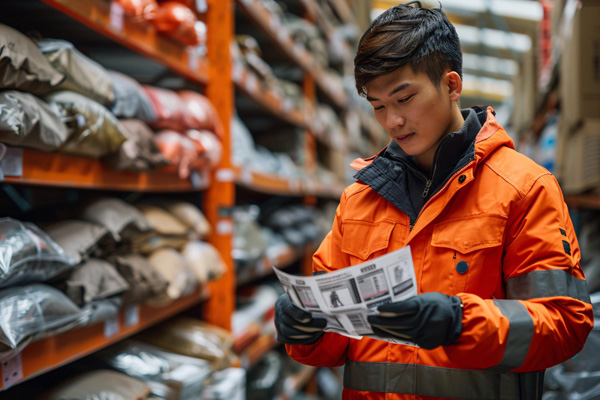
- PPI (Pre-Production Inspection) - inspection before production starts.
We check raw materials/components, specification compliance, samples, packaging/labeling, readiness to start (checklist, control points). - DUPRO (During Production Inspection) - inspection during production (usually at 20–60% completion).
We monitor quality stability “on the go,” first mass-produced items, and identify defects before they become a batch-wide issue. - FRI (Final Random Inspection) - final random inspection before shipment.
We check the finished batch against AQL/checklist: appearance, dimensions, functionality, completeness, sorting errors, packaging, and labeling. - CLS (Container Loading Supervision) - supervision of container loading/shipment.
We document that your specific batch is being loaded: number of boxes, packaging condition, labeling, palletizing, photo/video of the process, seal, and basic shipment data.
When an Audit Is Mandatory (Not Just “Recommended”)
- First purchase from a new supplier or factory.
- Large batch (when a mistake equals turnover loss).
- Change of raw material supplier (materials, components) at the factory — can degrade the finished product quality; material inspection is mandatory.
- OEM/ODM / own brand (materials, dimensions, batch stability are critical).
- High-risk products: electronics, children’s products, cosmetics, food contact items, anything requiring compliance with standards.
Trust, but verify! At Easy China, we recommend inspections every time, whether you’ve already placed 20 orders of the same product or it’s your very first. How we conduct inspections: see details here

4 Critical Checkpoints Where Purchases Most Often “Break Down”
Supplier “In Words” ≠ Supplier “In Reality”
The main risk is not the price but who exactly is behind the correspondence: a factory, a trading company, or a slick “fraudster’s showcase.”
Specification Not Locked in Contract or Agreements
Without a clear specification (material / size / tolerances / kit contents / branding conditions / packaging / labeling), the batch is almost guaranteed to have “issues.”
Golden Sample Not Established
Without a produced and mutually approved golden sample, there’s nothing to argue later: “this is how it’s supposed to be.”
Batch Ships Without Final Inspection
If the batch isn’t inspected before shipment, you’re buying a pig in a poke—even from a reliable supplier or a factory proven by previous orders.

DON'T RISK THE ENTIRE SHIPMENT
We inspect your goods before launch, during production, and prior to shipment. Packaging, labeling, and sorting accuracy.
Checklist for Verifying a Chinese Supplier (12 Methods)
1) Business License (营业执照) + Registry Verification
Request the business license and verify the company in the Chinese government registry (by name/code). Check: “active” status, registration date, legal address, legal representative, and business scope.
Red flag: “cannot provide,” “later,” “screenshots without data,” company not found in the registry.
2) Consistency of Legal Name and Address Across Sources
Cross-check: platform profile, license, website, email signatures, document stamps.
Red flag: different names/addresses without explanation.
3) Platform Profile: Not “Stars,” but Evidence of Real Activity
Look for account age, update frequency, product range, responses, terms, real photos/videos.
Red flag: fresh profile, “universal supplier of everything,” photos look like stock images.
4) Domain and Website Check (if available)
Check domain age, contacts, address, presence of production photos and their authenticity.
Red flag: no address, only messenger contacts, “sales@...” and no company details.
5) “Here and Now” Video Confirmation
Request a short video showing entrance/signboard/warehouse/production line + a paper with the current date and your code word.
Red flag: evasion, sending old videos, or videos made over several days.
6) Who Manufactures: Own Factory or Subcontractor
Ask directly: who manufactures, where, what capacity, and lead times for your volume. Subcontracting is acceptable if you get approval for material inspections and quality inspections after the full batch is ready.
Red flag: answers like “we’ll see,” no specifics.
7) Internal QC: How Quality Is Controlled In-House
Ask for a description of the internal quality control process: checkpoints, responsible persons, how defects are recorded.
Red flag: “everything is fine” without a process.
8) Photos/Videos of Packaging and Kit Contents - Before Samples
Clarify packaging, inserts, labeling, kit contents, and box options.
Red flag: “we’ll decide later,” “not important.”
9) Search for Complaints and Reputation (EN + CN)
Search the company name (including Chinese) + “scam/fraud/complaint” and Chinese complaint markers.
Red flag: repeated cases of “disappeared,” “substituted,” “extra charges.”
10) Samples
Take samples before the batch; record characteristics: material, dimensions, color, functionality, packaging.
Red flag: discouraging samples and pushing for “batch immediately,” or claiming samples are unavailable in stock.
11) Golden Sample - Recorded in Checklist
After sample approval, secure: photos/videos, measurements, criteria, tolerances, packaging and labeling, logo application conditions, packaging print conditions, instructions, inserts.
Red flag: “let’s do it without paperwork,” “we understand everything.”
12) Factory Audit / Inspection - When the Stakes Are High
For large batches or complex products, engage an audit/inspection to confirm the factory’s reality and batch quality before shipment.
Red flag: refusal of any third-party checks, unwillingness to accept inspectors at the factory, excuses to provide photos and videos independently.
Batch Inspection Before Shipment: 7 Essential Things to Document
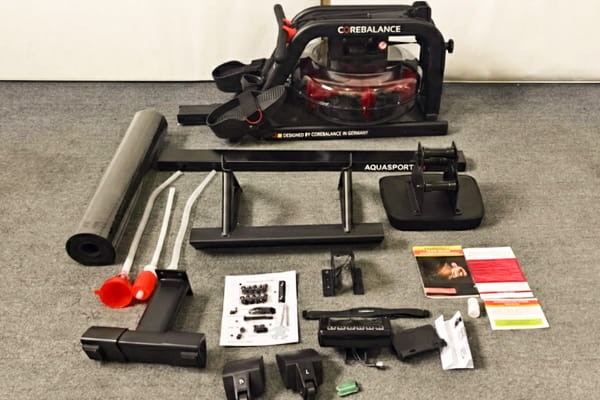
Inspecting rowing machines
Before shipment, it is crucial to document the batch as a fact, not just “everything is fine.” Start with an agreed checklist and a golden sample (reference): material, dimensions, color, functionality, appearance.
Next, record the inspection method: how many units were checked, what measurements were taken, and the criteria for accepting or rejecting the results.
Then confirm completeness and absence of mix-ups: models/sizes/colors, accessories, instructions, sets.
Packaging and labeling are a separate item: box type, internal protection, labels/barcodes, batch numbers, number of boxes, total weight and dimensions — these directly affect warehousing, delivery, and returns.
The report must include evidence: photos/videos of measurements, close-ups of defects, SKU recounts.
Most importantly — an action plan before shipment: what will be fixed, replaced, repackaged, and who will confirm the re-inspection. If the product is sensitive to transport, add documentation of loading and the condition of pallets/container.
Our Cases on Factory Inspections and Product Quality Checks in China
Watch, get inspired, try, and achieve your planned results

Find more engaging cases on factory inspections, exhibition visits, audits of various product categories in China, as well as other services on our YouTube channel.
In addition to case studies, you will find useful information on creating and scaling product businesses, current product selections, interviews with entrepreneurs, and much more valuable content.
Conclusions from the Author and the Easy China Business Team
To sum up the key point: success in wholesale purchasing from China is not about “luck with the supplier,” but about a control system. If you have a verifiable supplier, an approved specification, a golden sample, and clear control checkpoints (PPI / DUPRO / FRI / CLS), you turn your purchase into a manageable process rather than a gamble.
In 2026, the winners are companies that calculate the cost of mistakes in advance: defects, mix-ups, poor packaging, and lack of pre-shipment inspection almost always cost more than timely verification. Therefore, the right logic is simple: first verify the supplier, then samples and the golden sample, then batch inspection with photo/video evidence — and only after that, shipment.
If you want to reduce risks and save working capital, follow a checklist and document all agreements: materials, dimensions, tolerances, completeness, labeling, and packaging. When stakes are high, engage factory audits and independent inspections. The Easy China Business team helps you build this control tailored to your product: from supplier verification and checklist preparation to batch inspection and shipment supervision — so that what you agreed on arrives at your warehouse.
💡 Useful services
You may also be interested in