Going to the factory ourselves or hiring a guide? Pros and cons of a business trip to China

Updated: 19.01.2026
China is open, visas are being issued, and the Canton Fair is once again breaking attendance records. We explore whether it’s better to visit factories alone, in a group, or opt for a personalized business trip. Comparing all three approaches.
A business trip to China is not just about “seeing factories.” It’s a way to quickly make decisions that could otherwise take months: selecting 2-5 suppliers, comparing terms, verifying production reality, and agreeing on quality, packaging, and deadlines.
But there’s one catch: the trip pays off only when you have a clear goal and plan. Otherwise, you’ll return with contacts, photos, and fatigue—but no results.
A well-planned business trip can recoup its cost on the very first purchase or production run.
ARE YOU LOOKING FOR RESULTS, NOT JUST A “TOUR”?
We arrange meetings in advance, accompany you on-site, and see the project through to completion
In Brief (30 seconds) if you’re short on time
- If you need complete freedom and already have experience – you can go independently. But you pay with time and risks.
- If you want impressions, networking, and to “understand how it works” – a group business tour is suitable. This is a “scouting” format, not for closing deals.
- If you need conditions, agreements, control, and efficiency – individual support usually wins: meetings tailored to your product + translation/negotiations + documenting outcomes + a clear next step.
Article Contents
When a Trip to China Is Truly Justified
A trip makes sense if you have at least one of the following:
- You are already selling and want to increase your margin by working with direct suppliers or OEM/ODM (under your own brand).
- It is important for you to verify production “in person”: the workshop, equipment, warehouse, quality control, discipline.
- You need to compare 3-6-10 suppliers against the same technical specifications and receive comparable responses (not just “we can do everything”).
- You are attending an exhibition with the goal: contacts → meetings → terms → decision protocols.
If you do not yet have basic inputs (target price, volume benchmark, quality/packaging requirements) — it’s better to gather these first. Then the trip becomes a tool, not an adventure.
Option 1. Independent Trip to China
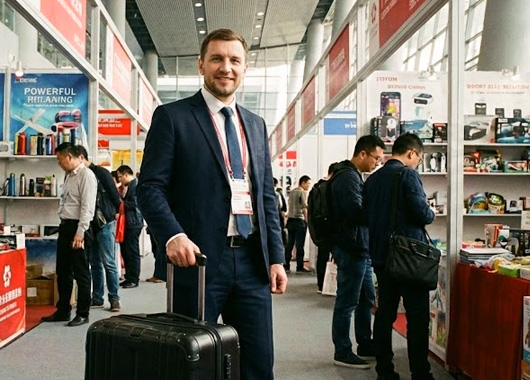
Many entrepreneurs, especially at the start, think: “I’ll find everything myself. Why pay intermediaries?” It seems enough to know English, use an online translator, and have a few chats—and you can confidently fly to the factories.
In practice, an independent trip almost always begins the same way: you’ve contacted suppliers in advance, arrived, and try to fit 3-4 meetings a day while juggling daily logistics and moving around industrial zones.
By the first or second stop, it becomes clear that more time is spent not at the factory but on “supporting tasks”: travel, waiting, clarifying who actually makes decisions, and why answers keep changing.
The main risk is not that you “won’t find a supplier,” but that you won’t fix conditions in a way that they are later fulfilled: quality, packaging, deadlines, responsibility.
As a result, the trip may provide experience and contacts, but often requires a second iteration—with a system and support—to achieve results.
Option 2. Group Business Tour to China
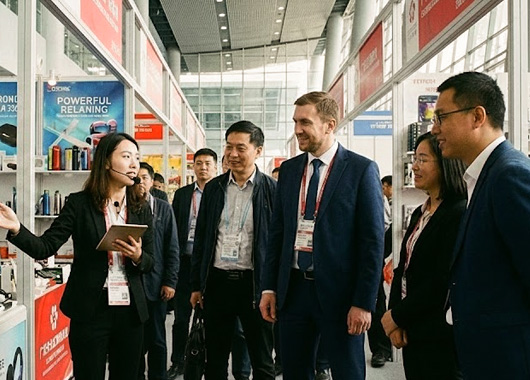
A group business tour is usually chosen by those who want to quickly “get into the topic”: see exhibitions, markets, a couple of factories, and understand what China looks like in a real business context.
It’s a comfortable format because the route and daily life are already organized: transport, hotels, and basic program points.
Within the tour, you get plenty of communication and observations: who ships what, where suppliers are found, and what mistakes newcomers make. Often, this is where the first “insights” appear that save time at the start.
But it is important to understand: the program is made “on average for the group,” so your tasks and your product are not always the focus.
Due to the format and timing, negotiations are often superficial: there is little time, decisions are not fixed, and deep issues (technical specifications, OEM/ODM, packaging, responsibility, quality control) are left “for later.”
Therefore, the tour works well as reconnaissance and networking, but if the goal is conditions and specific agreements for your project, usually the next step is required.
Option 3. Individual Support in China (Tailored to Your Project)
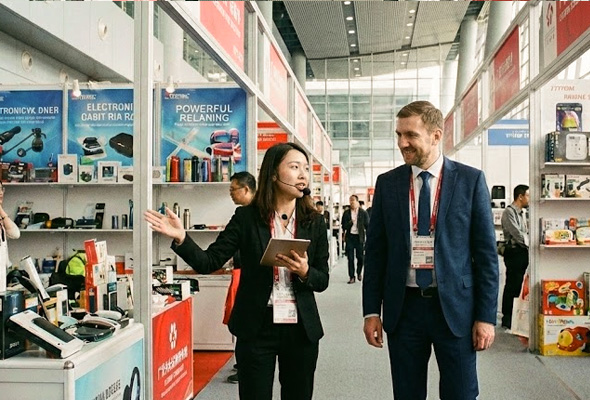
Individual support is chosen when the trip should deliver results, not just impressions: specific suppliers, clear terms, and a controlled process after returning.
The key difference here is that the work starts before departure: you define product inputs, target figures, and requirements, while the team pre-selects relevant factories and schedules meetings in advance.
In China, you don’t “hop between points,” but follow a route tailored to your task. Meetings include translation/negotiations, verification of production reality, and most importantly – documentation of outcomes: what was agreed, confirmed parameters, samples to be sent, deadlines, and next steps. This reduces the risk of “polite promises” turning into surprises later.
An advantage of this approach is project continuation after the trip: sample approvals, production control, quality checks, and support until completion.
As a result, you receive not just contacts, but a chain of decisions leading to a predictable outcome.
Our Case Studies on Organizing Business Trips to China

Find more fascinating case studies on business support in China, visits to exhibitions, factories, wholesale markets, and other services on our YouTube channel
Besides case studies, you will find valuable information on building and scaling product businesses, up-to-date product selections, interviews with entrepreneurs, and much more useful content.
Comparison of Business Trip Options to China
| Criterion | Independent | Group Tour | Individual Support |
|---|---|---|---|
| Organization Cost | Low (tickets, hotel, meals, transport) | High (package tour including accommodation and meals) | Medium (customized service per project) |
| Preparation | Your responsibility | Standardized program | In-depth pre-research per project |
| Meeting Efficiency | Low (1 meeting per day) | Medium (a lot of unnecessary meetings) | Maximum (2-5 targeted meetings per day) |
| Depth of Negotiations | Difficult (language barrier) | Superficial | Professional |
| Focus on Your Project | High | Low | High |
| Trip Outcome | Impressions + Contacts | Networking + Understanding | Targeted Contracts + Terms |
| Follow-up Work | Independent search for inspectors, logisticians, and contractors | Independent search for inspectors, logisticians, and contractors | Full turnkey deal support |
Preparation Checklist: To Make Your Trip Pay Off
Before Departure (2–4 Weeks)
- Define your technical specifications: materials, dimensions, tolerances, components, packaging, labeling.
- Identify 3 key figures: Target Price, volume, deadlines.
- Prepare a “short package”: photos/references, quality requirements, survey checklist.
- Schedule meetings in advance and confirm who on the factory side makes decisions.
Route and Logistics
- Group meetings by location: industrial geography in China is more important than it seems.
- Plan not “6 stops a day,” but 2-3 quality meetings where you can discuss terms and inspect production.
- Allow time for the unexpected: traffic jams, waiting, rescheduling, and mandatory lunch/dinner with factory management.
At the Factory
- Request to see the workshop, warehouse, incoming inspection, and packaging area — these are quick indicators of discipline.
- Record outcomes immediately: price/deadlines/payment terms/packaging/next steps.
- If it’s OEM/ODM, clarify in advance who handles development, how samples are approved, and what counts as “ready”.
After Meetings
- Consolidate suppliers into a comparison table: identical questions → comparable answers.
- Don’t rush into payment “on emotions” after the trip: it’s better to complete the procurement and sample/testing phase.
- Decide who will control processes in China and maintain communication on the project once you are back home.
Conclusions from the Author and the Easy China Business Team
An independent trip offers freedom but requires experience and discipline. A group tour helps you “get into the topic” but rarely results in a deal tailored to your product.
If your goal is specific terms, agreement documentation, and a controlled process, it’s better to choose a format where the trip is structured as a project: with preparation, routes, and meeting protocols.
If you want, we can create a 3–5 day trip program tailored to your product/project and schedule meetings in advance so that in China you focus on decisions, not logistics. Tell us what you buy/manufacture — we’ll suggest the optimal format.
💡 Useful services
You may also be interested in