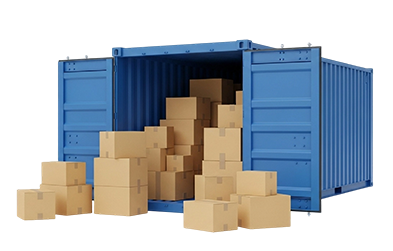
LCL sea freight from China is an efficient solution for businesses importing small to medium shipment volumes without the need to book a full container. The LCL (Less than Container Load) model means your cargo is shipped in a shared container alongside shipments from other suppliers, and you pay only for the space you use.
For B2B companies, consolidated sea freight from China is a tool to optimize logistics costs, manage inventory turnover, and maintain flexibility across multiple suppliers. Easy China Business organizes LCL shipping from China end-to-end, considering routing, consolidation, cargo restrictions, and real delivery economics.
When LCL Shipping Makes Sense
LCL shipping from China is typically used when shipment volume is not sufficient to justify a full container (FCL), but cost efficiency remains a priority.
- Small to medium shipments — no need to pay for unused container space.
- Regular supply chains — flexible sourcing from multiple suppliers.
- Cost optimization — pay only for the actual shipment volume.
- Flexible logistics — suitable for test orders and commercial batches.
In many supply chains, LCL is used as part of a hybrid strategy: smaller volumes move by sea, urgent shipments go by air, and larger volumes are shipped via FCL. This approach improves China logistics efficiency for B2B businesses.
What’s Included in LCL Shipping
When you order LCL sea freight from China, you receive more than transportation — you get full coordination of the logistics process.
- Cargo assessment: volume, density, packaging, and restrictions.
- Warehouse consolidation in China.
- Route planning and carrier selection.
- LCL freight cost calculation with a clear breakdown.
- Compliance and cargo restriction checks.
- Document preparation (commercial invoice, packing list).
- Payment coordination across logistics stages.
- Shipment tracking and status updates.
For B2B clients, this ensures process transparency, predictable timelines, and clear cost structure.
What Determines LCL Freight Cost
The query “LCL shipping cost from China” is one of the most common, but pricing cannot be based on weight alone.
- Cargo volume and density (CBM vs weight).
- Product type and classification.
- Route structure and number of transshipments.
- Consolidation and deconsolidation handling.
- Port charges and local fees.
- Customs clearance and final delivery.
We provide multiple delivery scenarios — lower cost, faster transit, or balanced — allowing you to make LCL logistics from China a predictable part of your business operations.
Sea Freight Routes and Risk Factors
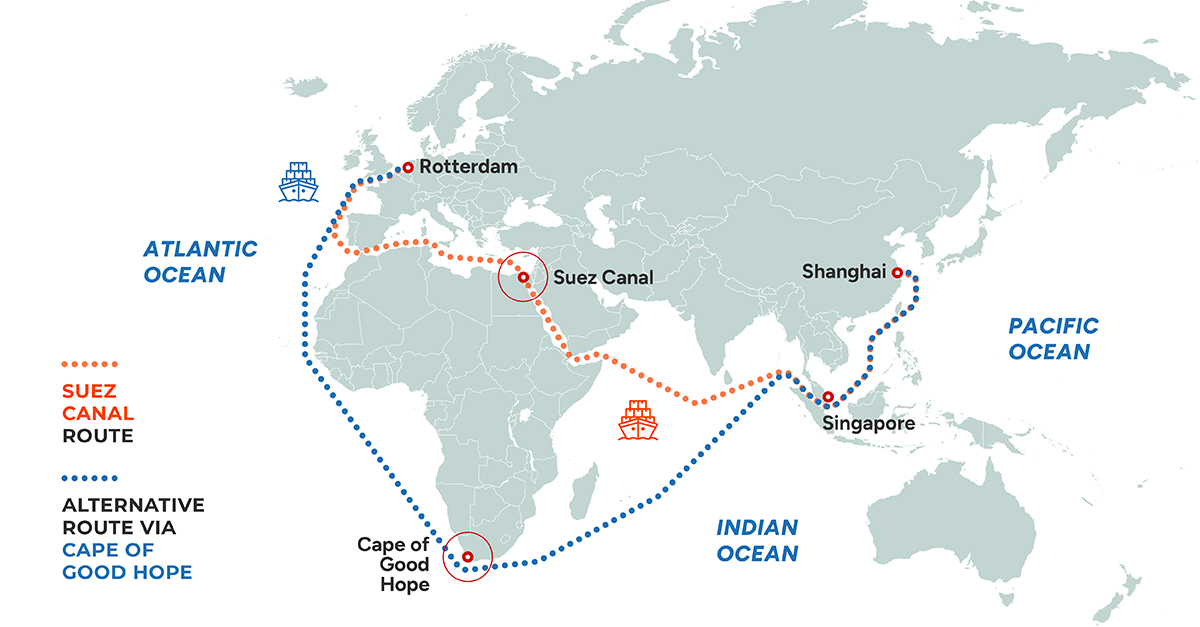
Sea freight from China relies on global shipping corridors connecting Asia with Europe and other regions.
In periods of instability, carriers may adjust routes or use alternative paths, including rerouting around Africa. This impacts transit time, freight rates, and schedule reliability.
For B2B operations, it is critical to evaluate not only the base route but also potential risks: delays, port congestion, service changes, and additional surcharges.
What Cargo Is Suitable for LCL
LCL sea freight is suitable for a wide range of products: electronics, components, retail goods, e-commerce inventory, and regular shipment batches.
Additional review may be required for batteries, liquids, hazardous goods, fragile cargo, and products with specific handling or documentation requirements.
Why Businesses Choose ECB
- Transparent pricing. Clear and accurate LCL shipping cost from China with no hidden fees.
- Route optimization. Logistics solutions tailored to your timelines and budget.
- Process control. Cargo, documentation, and shipment stages are verified.
- B2B-focused approach. Full visibility of logistics structure and decision-making.
How to Get an LCL Quote
To receive a quote, provide: product details, volume, weight, dimensions, photos, origin location, destination, and any restrictions.
We will prepare the most efficient LCL shipping solution from China tailored to your business needs.

 under control
  for B2B